Insights
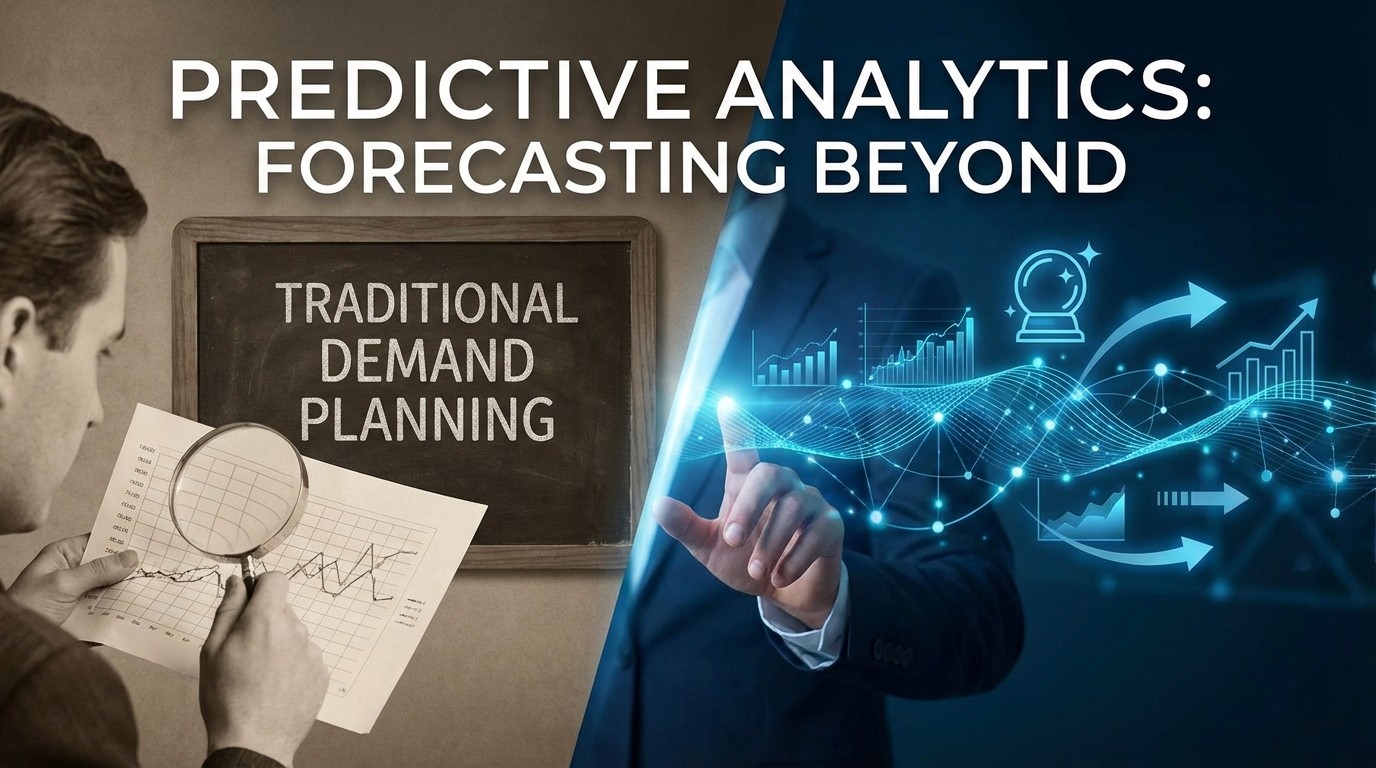
Predictive Analytics: Forecasting Beyond Traditional Demand Planning
Introduction
Demand forecasting has traditionally relied on historical sales data, seasonal trends, and manual planning assumptions. While these methods offer baseline insights, they struggle to keep pace with today’s volatile markets, shorter product life cycles, and rapidly shifting customer behavior.
Predictive analytics introduces a data-driven approach that goes beyond backward-looking forecasting. By leveraging advanced algorithms, machine learning, and real-time data sources, organizations can anticipate demand patterns with greater accuracy and agility.
Limitations of Traditional Forecasting Models
Conventional forecasting approaches face several structural limitations:
Heavy reliance on historical averages
Limited ability to incorporate external signals (weather, promotions, market shifts)
Inflexibility in responding to sudden demand changes
Manual intervention that introduces bias and delays
Siloed data sources across commercial and operational teams
These constraints lead to common outcomes such as overstocking, stockouts, and inefficient capacity planning.
How Predictive Analytics Transforms Forecasting
Predictive analytics models process large volumes of structured and unstructured data to generate forward-looking insights. Key capabilities include:
Real-time demand sensing using live sales and market signals
Pattern recognition across complex, multi-variable datasets
Scenario modeling for demand volatility
Continuous model refinement as new data becomes available
Integration of external variables such as economic indicators and promotional activity
This allows organizations to move from reactive planning to proactive, insight-driven decision-making.
Business Impact
Organizations adopting predictive analytics in demand planning report improvements across several dimensions:
Higher forecast accuracy
Reduced inventory carrying costs
Improved service levels and fill rates
Better alignment between sales, operations, and procurement
Enhanced responsiveness to market disruptions
Predictive forecasting also strengthens strategic planning by enabling scenario-based decision frameworks rather than single-point forecasts.
Implementation Considerations
To successfully deploy predictive analytics, organizations should address:
Data quality and governance
Integration with ERP, WMS, and CRM systems
Cross-functional collaboration between IT, operations, and commercial teams
Skills development in analytics and data interpretation
Ongoing model validation and performance monitoring
Technology alone is insufficient without organizational alignment and data maturity.
Strategic Recommendations
Leaders should approach predictive analytics as part of a broader planning transformation:
Prioritize high-impact forecasting use cases
Invest in centralized data platforms
Build cross-functional forecasting governance models
Define performance metrics beyond forecast accuracy (e.g., service level, working capital impact)
Continuously iterate models based on real-world performance
Conclusion
Predictive analytics represents a significant evolution in demand planning capabilities. By shifting from static, historical forecasting to dynamic, forward-looking models, organizations can improve resilience, reduce operational risk, and enhance decision quality. In an environment defined by uncertainty, predictive forecasting offers a strategic advantage rather than a mere operational enhancement.
More to Discover


Insights
Predictive Analytics: Forecasting Beyond Traditional Demand Planning
Introduction
Demand forecasting has traditionally relied on historical sales data, seasonal trends, and manual planning assumptions. While these methods offer baseline insights, they struggle to keep pace with today’s volatile markets, shorter product life cycles, and rapidly shifting customer behavior.
Predictive analytics introduces a data-driven approach that goes beyond backward-looking forecasting. By leveraging advanced algorithms, machine learning, and real-time data sources, organizations can anticipate demand patterns with greater accuracy and agility.
Limitations of Traditional Forecasting Models
Conventional forecasting approaches face several structural limitations:
Heavy reliance on historical averages
Limited ability to incorporate external signals (weather, promotions, market shifts)
Inflexibility in responding to sudden demand changes
Manual intervention that introduces bias and delays
Siloed data sources across commercial and operational teams
These constraints lead to common outcomes such as overstocking, stockouts, and inefficient capacity planning.
How Predictive Analytics Transforms Forecasting
Predictive analytics models process large volumes of structured and unstructured data to generate forward-looking insights. Key capabilities include:
Real-time demand sensing using live sales and market signals
Pattern recognition across complex, multi-variable datasets
Scenario modeling for demand volatility
Continuous model refinement as new data becomes available
Integration of external variables such as economic indicators and promotional activity
This allows organizations to move from reactive planning to proactive, insight-driven decision-making.
Business Impact
Organizations adopting predictive analytics in demand planning report improvements across several dimensions:
Higher forecast accuracy
Reduced inventory carrying costs
Improved service levels and fill rates
Better alignment between sales, operations, and procurement
Enhanced responsiveness to market disruptions
Predictive forecasting also strengthens strategic planning by enabling scenario-based decision frameworks rather than single-point forecasts.
Implementation Considerations
To successfully deploy predictive analytics, organizations should address:
Data quality and governance
Integration with ERP, WMS, and CRM systems
Cross-functional collaboration between IT, operations, and commercial teams
Skills development in analytics and data interpretation
Ongoing model validation and performance monitoring
Technology alone is insufficient without organizational alignment and data maturity.
Strategic Recommendations
Leaders should approach predictive analytics as part of a broader planning transformation:
Prioritize high-impact forecasting use cases
Invest in centralized data platforms
Build cross-functional forecasting governance models
Define performance metrics beyond forecast accuracy (e.g., service level, working capital impact)
Continuously iterate models based on real-world performance
Conclusion
Predictive analytics represents a significant evolution in demand planning capabilities. By shifting from static, historical forecasting to dynamic, forward-looking models, organizations can improve resilience, reduce operational risk, and enhance decision quality. In an environment defined by uncertainty, predictive forecasting offers a strategic advantage rather than a mere operational enhancement.
More to Discover
Insights
Predictive Analytics: Forecasting Beyond Traditional Demand Planning
Introduction
Demand forecasting has traditionally relied on historical sales data, seasonal trends, and manual planning assumptions. While these methods offer baseline insights, they struggle to keep pace with today’s volatile markets, shorter product life cycles, and rapidly shifting customer behavior.
Predictive analytics introduces a data-driven approach that goes beyond backward-looking forecasting. By leveraging advanced algorithms, machine learning, and real-time data sources, organizations can anticipate demand patterns with greater accuracy and agility.
Limitations of Traditional Forecasting Models
Conventional forecasting approaches face several structural limitations:
Heavy reliance on historical averages
Limited ability to incorporate external signals (weather, promotions, market shifts)
Inflexibility in responding to sudden demand changes
Manual intervention that introduces bias and delays
Siloed data sources across commercial and operational teams
These constraints lead to common outcomes such as overstocking, stockouts, and inefficient capacity planning.
How Predictive Analytics Transforms Forecasting
Predictive analytics models process large volumes of structured and unstructured data to generate forward-looking insights. Key capabilities include:
Real-time demand sensing using live sales and market signals
Pattern recognition across complex, multi-variable datasets
Scenario modeling for demand volatility
Continuous model refinement as new data becomes available
Integration of external variables such as economic indicators and promotional activity
This allows organizations to move from reactive planning to proactive, insight-driven decision-making.
Business Impact
Organizations adopting predictive analytics in demand planning report improvements across several dimensions:
Higher forecast accuracy
Reduced inventory carrying costs
Improved service levels and fill rates
Better alignment between sales, operations, and procurement
Enhanced responsiveness to market disruptions
Predictive forecasting also strengthens strategic planning by enabling scenario-based decision frameworks rather than single-point forecasts.
Implementation Considerations
To successfully deploy predictive analytics, organizations should address:
Data quality and governance
Integration with ERP, WMS, and CRM systems
Cross-functional collaboration between IT, operations, and commercial teams
Skills development in analytics and data interpretation
Ongoing model validation and performance monitoring
Technology alone is insufficient without organizational alignment and data maturity.
Strategic Recommendations
Leaders should approach predictive analytics as part of a broader planning transformation:
Prioritize high-impact forecasting use cases
Invest in centralized data platforms
Build cross-functional forecasting governance models
Define performance metrics beyond forecast accuracy (e.g., service level, working capital impact)
Continuously iterate models based on real-world performance
Conclusion
Predictive analytics represents a significant evolution in demand planning capabilities. By shifting from static, historical forecasting to dynamic, forward-looking models, organizations can improve resilience, reduce operational risk, and enhance decision quality. In an environment defined by uncertainty, predictive forecasting offers a strategic advantage rather than a mere operational enhancement.